In electronics development, prototypes are often viewed as a way to validate functionality and move a project into its next phase. The focus is typically on speed, iteration, and getting hardware into engineers’ hands as quickly as possible.
However, decisions made during the prototype stage can also have a significant impact on how smoothly a product transitions into production.
While rapid-turn prototype providers play an important role in development cycles, there can be advantages to working with a manufacturing partner that also understands long-term production requirements.
Not All Prototype Builds Are Designed for Production
Some prototype houses are built around fast-turn assembly. They can quickly produce small quantities, but they may not evaluate whether the design will transition efficiently into higher-volume manufacturing.
That can create problems later, including:
-
-
- • Difficult assembly processes
- • Component sourcing challenges
- • Test strategy compatibility between prototype and production
- • Recreating or modifying test programs during production transfer
- • Differences in test methods between prototype and production environments
- • Yield or quality concerns
- • Redesigns before production launch
-
What works in a low-volume prototype environment does not always work in production.
Why Using the Same Partner for Prototype and Production Creates Long-Term Value
When the same company supports both prototype and production builds, manufacturing expertise is introduced much earlier in the process.
Instead of simply building to print, the team can review:
-
-
- • Design for Manufacturability (DFM)

- • Component availability and lifecycle risks
- • Assembly efficiency
- • Test strategy
- • Long-term scalability
- • Design for Manufacturability (DFM)
-
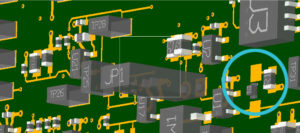
This helps identify potential manufacturing issues before they become costly production delays.
Continuity between prototype and production allows manufacturing teams to build on existing product knowledge and established processes, helping reduce delays and improve production readiness.
Early Collaboration Reduces Risk
One of the biggest advantages of working with a full-service PCBA and System Integration Partner during prototyping is access to cross-functional support early in development.
Engineering, supply chain, quality, and manufacturing teams can work together to identify concerns such as:
-
-
- • Tight component spacing
- • Long lead-time parts
- • Assembly challenges
- • Opportunities to improve manufacturability
-
Addressing these issues during prototyping is significantly easier than correcting them after production begins.
Thinking Beyond the Prototype
A true PCBA and System Integration Partner looks beyond the immediate build and considers the long-term success of the program.
-
-
- That includes:
- •Production readiness
- • Supply chain stability
- • Quality planning
- • Process consistency
- • Scalability across future production volumes
-
Final Thoughts
As products move from development into full production, having a partner that already understands the program can help reduce delays, improve efficiency, and support a more successful product launch.
Choosing a PCBA and System Integration Partner that approaches prototyping with scalability and long-term manufacturing goals in mind can provide far more value than simply delivering a quick-turn build.